Most home brewers notice the foam and bubbling when hot water hits their grounds and assume something is wrong. It’s actually one of the most important moments in your entire brew. Coffee bloom is the rapid release of CO2 gas from freshly roasted and ground coffee when hot water first contacts the grounds. Understanding this reaction is the difference between a flat, uneven cup and one that’s rich, balanced, and full of the flavors you paid for. This guide breaks down the science, the method, and the mistakes so you can brew with confidence every time.
Table of Contents
- What is coffee bloom?
- Why coffee bloom matters for flavor and extraction
- The science behind coffee bloom
- How to master coffee bloom: step-by-step guide
- Common mistakes and expert tips for coffee blooming
- Enhance your coffee experience with Z’s Coffee
- Frequently asked questions
Key Takeaways
| Point | Details |
|---|---|
| Coffee bloom explained | Bloom is the visible release of CO2 when hot water hits fresh coffee grounds, signaling freshness. |
| Bloom boosts flavor | Allowing coffee to bloom ensures even extraction and unlocks full flavor potential in your cup. |
| Master the technique | Use 2-3 times your coffee weight in hot water, pour evenly, and wait 30-45 seconds for best results. |
| Fresh beans matter | A strong bloom indicates your beans are fresh and optimal for superior home brewing. |
What is coffee bloom?
Coffee bloom is that dramatic, foam-like bubbling you see in the first few seconds of brewing. It looks almost alive. What you’re actually watching is carbon dioxide (CO2) gas escaping from the coffee grounds at high speed. This gas built up inside the bean during roasting and stayed trapped in the bean’s porous matrix until hot water broke it free.
“Coffee bloom is the rapid release of CO2 from freshly roasted and ground coffee when hot water first contacts the grounds.”
Here’s what’s happening at a basic chemistry level. During roasting, heat triggers a series of reactions inside the bean, including the Maillard reaction (the same browning process that gives bread its crust) and caramelization of sugars. These reactions produce CO2 as a byproduct, and the gas gets locked inside the bean’s structure. When you grind the bean, you expose more surface area. When hot water hits those grounds, the gas rushes out fast.
This is directly tied to coffee quality and freshness. The more vigorous the bloom, the fresher the coffee. Key things to know about bloom:
- It is most dramatic in the first 10 to 30 seconds of contact with water
- Freshly roasted beans produce the strongest bloom
- Ground coffee blooms more intensely than whole beans because of increased surface area
- The reaction follows Henry’s Law, which describes how gases dissolve and escape from liquids under pressure and temperature changes
Bloom is not a flaw. It’s a freshness signal and a functional brewing stage you should be using intentionally.
Why coffee bloom matters for flavor and extraction
Skipping bloom is one of the most common and costly mistakes in home brewing. When CO2 is still trapped in the grounds, it creates a physical barrier between the water and the coffee particles. Water cannot fully saturate the bed evenly. Instead, it finds the path of least resistance and flows through dry pockets, a problem called channeling.
Channeling means some grounds get over-extracted (bitter, harsh) while others stay under-extracted (sour, weak). The result is a cup that tastes unbalanced, no matter how good your beans are. Blooming degasses the coffee bed, allowing even water saturation, preventing channeling, and promoting balanced extraction of acids, sugars, and oils for better flavor.
Bloom is the reset button that prepares your coffee bed for a clean, even extraction.
Here’s what bloom actually unlocks in your cup:
- Acids: Bright, fruity notes that give specialty coffee its complexity
- Sugars: Natural sweetness that balances acidity without added sugar
- Oils: Body and mouthfeel that make coffee feel rich and satisfying
- Aromatics: Volatile compounds that create the smell and taste you associate with great coffee
Bloom is essential for home brewing methods like pour-over, French press, and drip coffee. For espresso, the high pressure of the machine handles degassing differently. For cold brew, the cold water and long steep time make bloom largely irrelevant.
The science behind coffee bloom
Let’s go one level deeper. During roasting, the Maillard reaction and caramelization generate CO2 that gets physically trapped inside the bean’s cellular structure. The hotter and longer the roast, the more CO2 is produced. Dark roasts actually degas faster after roasting because the bean structure is more porous and less able to hold the gas in.
When you pour hot water at 195 to 205°F (90 to 96°C) over your grounds, two things happen simultaneously. The heat lowers the solubility of CO2 in water (per Henry’s Law), and the water pressure forces the gas out of the grounds rapidly. That’s the bloom you see.
Bloom intensity indicates freshness: strong bloom for beans less than 3 to 4 weeks post-roast, weak or no bloom for stale coffee, coarse grind, or low temperature water.
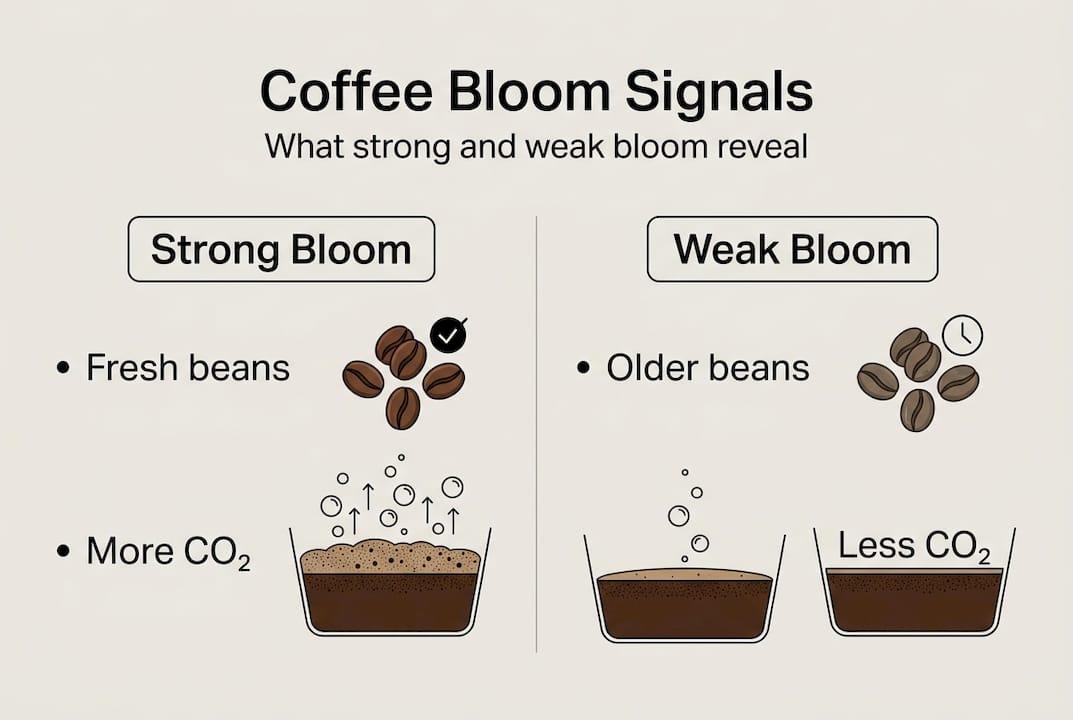
| Variable | Strong bloom | Weak or no bloom |
|---|---|---|
| Bean age | Under 3 weeks post-roast | Over 6 weeks post-roast |
| Grind size | Medium to fine | Very coarse |
| Water temperature | 195 to 205°F (90 to 96°C) | Below 185°F (85°C) |
| Roast level | Light to medium | Very dark or stale |
Understanding coffee origin also plays a role here. Beans from high-altitude regions tend to be denser and hold CO2 longer, which means a more sustained bloom. How your beans are stored matters too. Good packaging and freshness practices, like one-way valve bags, let CO2 escape without letting oxygen in, preserving bloom potential until you’re ready to brew.
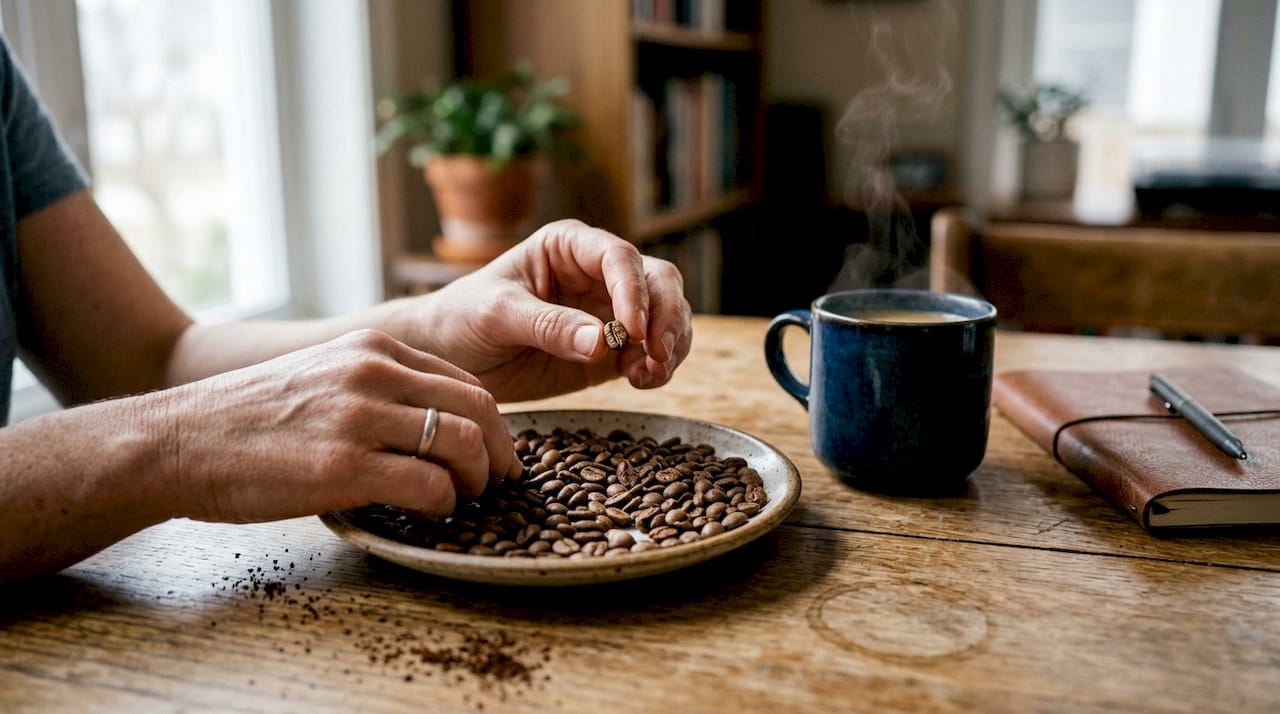
Pro Tip: If you want to test your beans’ freshness before brewing, add a small pinch of grounds to a glass of room-temperature water. Fresh beans will bubble noticeably. Stale beans will barely react. This is a quick way to check coffee aroma science in action.
How to master coffee bloom: step-by-step guide
Once you know the science, the method is straightforward. Here’s how to bloom your coffee correctly every time.
- Weigh your coffee. Use a kitchen scale. Precision matters here.
- Heat your water to 195 to 205°F (90 to 96°C). Just off the boil works if you don’t have a thermometer.
- Measure your bloom water. Pour 2 to 3 times the coffee’s weight in water for the bloom stage. For 15g of coffee, use 30 to 45g of water.
- Pour in a slow, circular motion starting from the center and moving outward. A gooseneck kettle gives you the control you need for this.
- Wait 30 to 45 seconds. Watch the bubbling. When it slows significantly, your bloom is done.
- Continue your brew with the remaining water at your normal pace.
For light roasts, extend the bloom to 60 seconds. Light roasts degas more slowly because the bean structure is denser and less porous. Rushing the bloom on a light roast means you’re still fighting CO2 during extraction.
| Brewing method | Coffee dose | Bloom water | Bloom time |
|---|---|---|---|
| Pour-over | 15g | 30 to 45g | 30 to 45 sec |
| French press | 20g | 40 to 60g | 30 to 45 sec |
| Drip (manual bloom) | 25g | 50 to 75g | 30 sec |
| Light roast (any method) | 15g | 30 to 45g | 45 to 60 sec |
To master home brewing at this level, you also need to think about your coffee bean types. Arabica and Robusta beans degas at different rates, and single-origin beans often behave differently from blends. The right brewing accessories, especially a gooseneck kettle and a scale, make a measurable difference in bloom consistency.
Pro Tip: Set a timer the moment you start pouring bloom water. Don’t guess. Consistent bloom timing is one of the easiest ways to make your results repeatable.
Common mistakes and expert tips for coffee blooming
Even experienced home brewers make these errors. Knowing what to watch for saves you from a frustrating cup.
Most common blooming mistakes:
- Using beans that are too old (over 6 weeks post-roast)
- Pouring bloom water unevenly, leaving dry patches in the coffee bed
- Using water that’s too cool, which slows CO2 release and weakens bloom
- Rushing through the bloom stage before bubbling has subsided
- Using too little water for the bloom, which doesn’t saturate the full bed
Lighter roasts degas slower and need a longer bloom, while dark roasts degas faster. Finer grinds increase resistance but produce a stronger, more visible bloom. An uneven pour causes dry pockets and channeling, which defeats the purpose of blooming entirely.
| Brewing method | Bloom needed? | Bloom time | Notes |
|---|---|---|---|
| Pour-over | Yes, critical | 30 to 60 sec | Most sensitive to channeling |
| French press | Yes, recommended | 30 to 45 sec | Improves saturation |
| Drip machine | Sometimes | 30 sec (manual) | Depends on machine design |
| Espresso | Less important | N/A | Pressure handles degassing |
| Cold brew | Not needed | N/A | Cold water, long steep |
For coffee varietals and brewing styles that use lighter, more complex beans, bloom time is especially important. If you’re choosing beans for home brew, always check the roast date on the bag. A roast date within the last two to four weeks is your sweet spot for a strong, productive bloom.
Quick troubleshooting:
- No bloom at all: Beans are stale or water is too cool
- Weak bloom: Grind is too coarse or beans are past their peak
- Uneven bloom: Pour was too fast or not circular enough
- Bloom collapses immediately: Beans may be very dark roast with most CO2 already off-gassed
Pro Tip: After pouring your bloom water, gently stir the grounds once with a spoon or chopstick to make sure all the coffee is wet. This eliminates dry pockets before they become channeling problems.
Enhance your coffee experience with Z’s Coffee
Now that you understand the science and the method, the next variable is the beans themselves. Fresh, high-quality beans are the foundation of a great bloom and a great cup.

Z’s Coffee offers a curated selection of fresh-roasted beans, specialty blends, and brewing accessories designed for home brewers who care about the details. Whether you’re looking for something smooth and approachable like medium roast mushroom coffee or want to explore the slow, cold extraction of cold brew coffee, there’s something in the collection for every brewing style. Fresh beans, the right gear, and a solid bloom technique are all you need to transform your daily cup from ordinary to exceptional.
Frequently asked questions
Can you brew good coffee without blooming?
Skipping bloom can result in flat or bitter coffee, especially with fresh grounds, because uneven extraction occurs and leads to off-flavors. Blooming is strongly recommended for pour-over, French press, and drip methods.
Does coffee bloom indicate bean freshness?
Yes. A strong, bubbly bloom signals beans roasted within the last 3 to 4 weeks, while weak or no bloom means the beans are older or stale.
How much water should I use for blooming?
Use 2 to 3 times the coffee’s weight in water. The standard bloom ratio means for 15g of coffee, you pour 30 to 45g of water during the bloom stage.
How long should I let my coffee bloom?
Most coffees need 30 to 45 seconds. Light roasts need 45 to 60 seconds because they degas more slowly due to their denser bean structure.
Is coffee bloom necessary for espresso or cold brew?
Bloom is less relevant for espresso or cold brew because espresso uses high pressure to handle degassing, and cold brew uses cold water with a long steep time that makes CO2 release a non-issue.