TL;DR:
- Water’s mineral content actively influences coffee flavor extraction and overall taste quality.
- Using properly balanced water with the right TDS level enhances brewing consistency and flavor.
- Testing and adjusting water with filters and remineralization create optimal conditions for coffee brewing.
Water is not just water. The liquid you pour into your brewer carries minerals, chemicals, and dissolved solids that directly shape what ends up in your cup. Most home brewers spend serious money on premium beans, dial in their grind size, and obsess over brew ratios, yet never stop to question what’s coming out of their tap. That oversight is costing them flavor. Water makes up roughly 98% of every cup of coffee, and its chemical makeup controls how much flavor your grounds actually release. This guide breaks down exactly how water quality affects extraction, which water types work best, and how to take practical control of your brew.
Table of Contents
- The science behind water and coffee extraction
- Why water quality matters: Tap vs filtered vs distilled
- Practical methods: Testing, adjusting, and improving water for brewing
- Connecting water, coffee beans, and brewing techniques
- What most guides miss about water and coffee
- Start your brewing journey with Z’s Coffee
- Frequently asked questions
Key Takeaways
| Point | Details |
|---|---|
| Minerals matter most | Proper calcium and magnesium levels in water drive rich, balanced coffee flavors. |
| Tap vs filtered effects | Filtered water improves extraction and reduces off-flavors by removing chlorine. |
| Testing is essential | Simple tools like TDS meters help optimize water for consistent brewing results. |
| Water and beans synergy | The best cup comes from matching bean type and brewing method to water quality. |
The science behind water and coffee extraction
Coffee extraction is a chemical process. When hot water meets ground coffee, it pulls soluble compounds out of the grounds and into your cup. Those compounds include acids, sugars, oils, and aromatic molecules that together create the flavor profile you taste. But water doesn’t just act as a passive carrier. Its mineral content actively participates in the process.
Calcium and magnesium ions are the key players here. These minerals bind flavor compounds, helping dissolve them from the coffee matrix and carry them into solution. Without enough of these ions, flavor compounds stay locked inside the grounds. Temperature adds energy to this process, increasing the solubility of those compounds and speeding up the rate at which they move from solid to liquid. Flow dynamics, meaning how water moves through and around the grounds, also matter because uneven flow creates under-extracted pockets and over-extracted zones in the same brew.
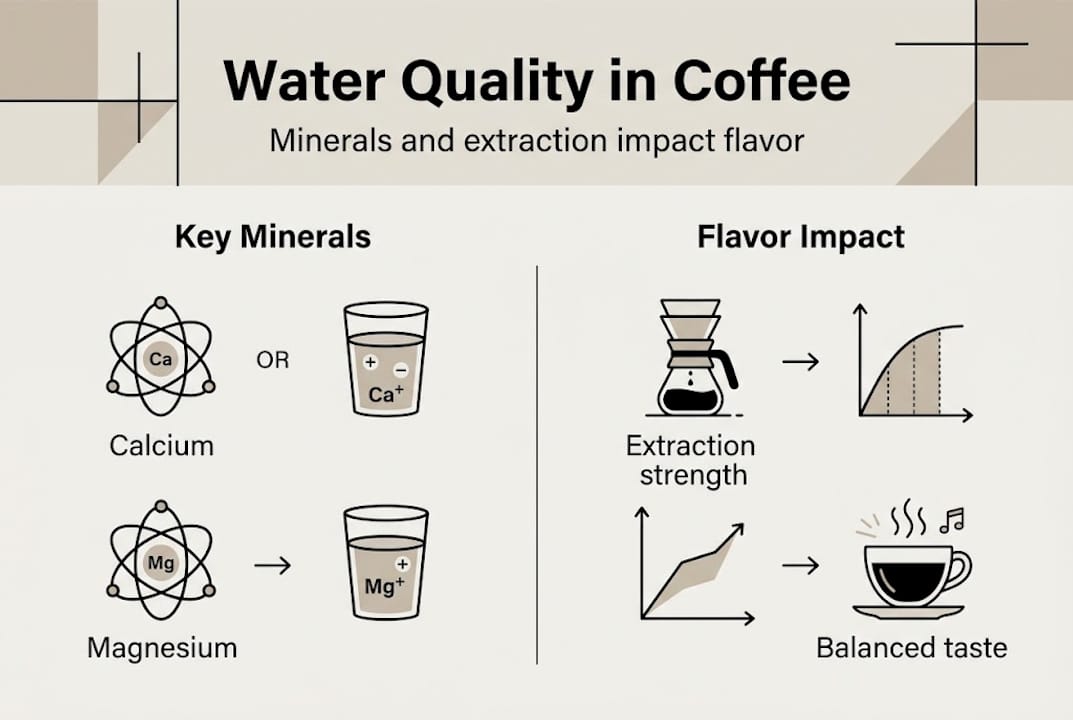
Research confirms that hardness influences extraction yield, with cations actively promoting the detachment of taste compounds from proteins in the coffee matrix. That’s why two brews made with identical beans and identical technique can taste completely different depending on the water used.
Here’s a quick breakdown of the key extraction mechanisms:
- Mineral action: Calcium and magnesium ions bind and dissolve flavor compounds from the coffee grounds
- Temperature: Higher heat increases solubility and accelerates extraction of desirable compounds
- Agitation: Water movement ensures even contact with all ground surfaces for uniform extraction
- Mineral balance: Too few minerals under-extracts; too many can over-extract or introduce harsh notes
“Water is the unseen catalyst for flavor complexity.” The mineral content of your water isn’t a background detail. It’s an active ingredient.
For a deeper look at how extraction mechanics shape your cup, the coffee extraction insights available on our blog break down the full process with practical brewing context.
Why water quality matters: Tap vs filtered vs distilled
Not all water is equal, and the differences between common water sources are dramatic enough to completely change your coffee’s character. Understanding what’s actually in your water is the first step toward controlling your brew.
Distilled and reverse osmosis water sit at one extreme. With near-zero TDS, this water produces flat, lifeless coffee because there are no minerals to facilitate extraction. Chlorine in tap water sits at the other problem end, imparting off-flavors that no amount of good beans can overcome. The sweet spot is a Total Dissolved Solids (TDS) level between 70 and 150 ppm (parts per million). Below 30 ppm, coffee tastes thin and hollow. Above 250 ppm, over-extraction and mineral interference create harsh, bitter results.
| Water type | Mineral profile | TDS range | Taste impact |
|---|---|---|---|
| Tap water | Variable, often high | 50–300+ ppm | Inconsistent; may carry chlorine off-flavors |
| Filtered water | Reduced chlorine, moderate minerals | 50–200 ppm | Cleaner, more consistent flavor |
| Distilled water | No minerals | 0–5 ppm | Flat, under-extracted, lifeless |
| Remineralized water | Controlled mineral addition | 70–150 ppm | Precise, balanced, optimal |
Here’s a quick pros and cons breakdown for each option:
- Tap water: Contains natural minerals that aid extraction, but chlorine and variable mineral levels create unpredictable results
- Filtered water: Removes chlorine and some contaminants while retaining useful minerals, a solid everyday choice
- Distilled water: Completely pure but useless for coffee without remineralization; needs mineral packets added back in
- Remineralized water: The gold standard for precision brewing; gives you full control over mineral content
For brewing styles that prioritize clean flavor brewing insights, water purity plays an even larger role. If you’re working with specialty coffee standards and high-grade beans, using suboptimal water is like putting cheap gas in a sports car.
Practical methods: Testing, adjusting, and improving water for brewing
Knowing water matters is one thing. Actually improving it at home is another. The good news is that testing and adjusting your water doesn’t require a lab or expensive equipment.
Follow these steps to get your water dialed in:
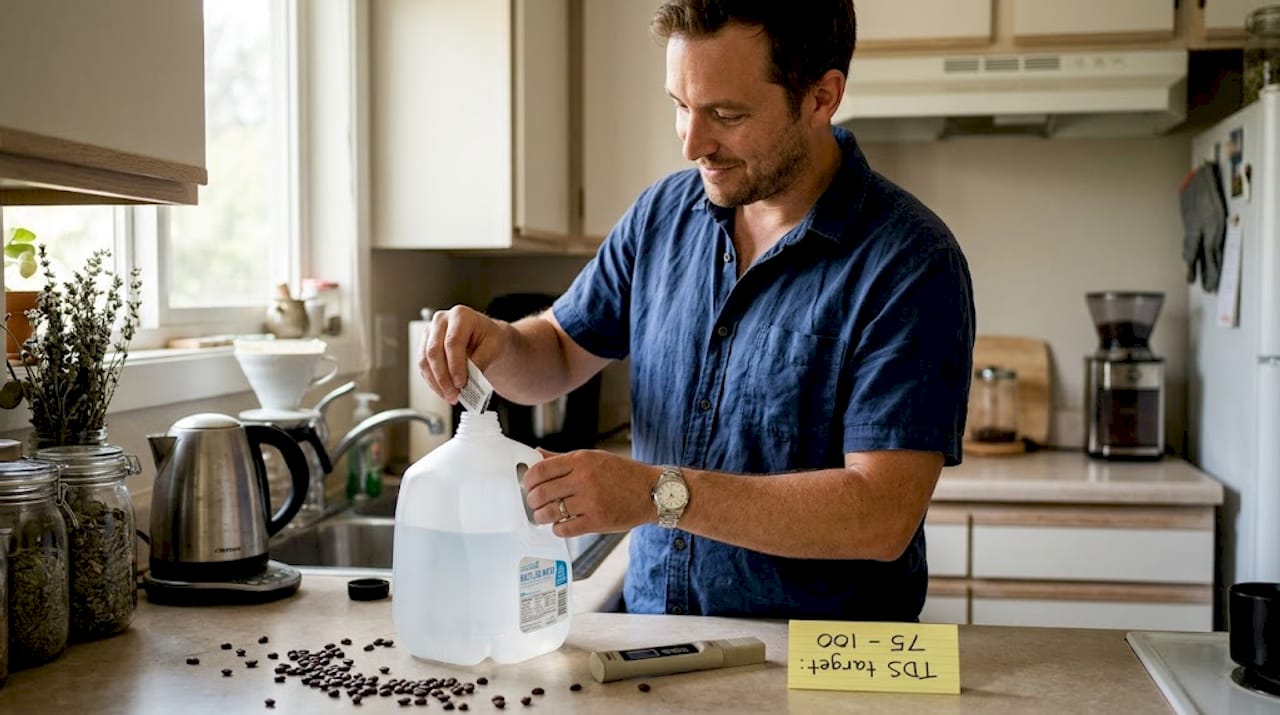
- Test your current water. Use an inexpensive TDS meter and water test strips to check mineral content, hardness, and pH. This gives you a baseline. Test TDS, hardness, and pH before making any changes so you know exactly what you’re working with.
- Choose the right filter. A carbon block filter is the most practical upgrade for most home brewers. It removes chlorine and chloramines without stripping minerals. If your tap water is very hard or has significant contamination, a reverse osmosis system gives you a clean slate.
- Remineralize if needed. If you’re using RO or distilled water, add a mineral packet designed for coffee brewing. These packets add precise amounts of magnesium and calcium to hit the ideal TDS range of 70 to 150 ppm.
- Perform a taste comparison. Brew the same coffee with your old water and your adjusted water side by side. Taste without milk or sugar. The difference is often immediate and significant.
- Track and repeat. Water quality can shift seasonally, especially with municipal tap water. Check your TDS monthly and adjust as needed.
Pro Tip: Mineral packets like Third Wave Water are a game-changer for consistency. Add one to a gallon of distilled water and you get a perfectly calibrated brewing base every single time, no guesswork involved.
For more strategies on getting the most from your beans, the coffee flavor enhancement tips on our blog pair well with water optimization. And if you want to understand how water fits into a broader quality framework, check out coffee quality standards for the full picture.
Connecting water, coffee beans, and brewing techniques
Water optimization doesn’t exist in a vacuum. The best results come when you match your water chemistry to both your bean type and your brewing method. These three variables interact constantly, and understanding their relationship gives you a real edge.
Different beans respond differently to the same water:
- Washed coffees tend to have bright, clean acidity. Softer water with lower mineral content lets that clarity shine without interference.
- Natural process coffees carry heavier, fruitier body. Slightly harder water can help extract those deeper, more complex compounds.
- Light roasts are denser and need more mineral support to fully extract their delicate flavor compounds.
- Dark roasts extract more easily and can turn harsh with very hard water; moderate mineral levels work best.
Research shows that cations promote flavor compound detachment from proteins, which means the mineral makeup of your water actively shapes what you taste from any given bean. This isn’t abstract chemistry. It’s something you can taste in your cup.
Brewing method also changes the ideal water profile:
| Brewing method | Preferred TDS range | Water hardness | Why it matters |
|---|---|---|---|
| Pour-over | 70–120 ppm | Soft to medium | Highlights clarity and acidity |
| Espresso | 100–150 ppm | Medium to hard | Needs minerals for crema and body |
| French press | 80–130 ppm | Medium | Full immersion benefits from balanced minerals |
| Cold brew | 70–100 ppm | Soft | Lower extraction rate needs clean, mineral-light water |
If you’re exploring how coffee origin and quality interact with brewing, water is the bridge between terroir and your cup. Different coffee varietal flavor impacts become more or less pronounced depending on your water’s mineral profile. And the processing methods for flavor your beans went through also determine how they’ll respond to different water chemistries.
What most guides miss about water and coffee
Here’s the uncomfortable truth most brewing guides skip: you cannot fix bad water with better beans. It doesn’t work that way. We’ve seen home brewers spend $30 on a single-origin specialty bag, brew it with chlorinated tap water, and then wonder why it tastes mediocre. The beans weren’t the problem.
Most guides tell you to use filtered water and leave it there. That’s a starting point, not a solution. The real insight is that water is an ingredient, not a utility. Treat it like one. Taste your water before you brew. If it tastes off on its own, metallic, flat, or chemical, your coffee will amplify those flaws, not hide them.
Another thing guides rarely mention: the coffee bloom flavor science is directly tied to water mineral content. A proper bloom requires water with enough mineral energy to agitate CO2 release from fresh grounds. Weak water produces a weak bloom and a weaker cup.
Pro Tip: Measure your TDS at least once a month. Municipal water supplies adjust their treatment seasonally, and your tap water in summer may be noticeably different from what you had in winter. Consistency in water means consistency in flavor.
Start your brewing journey with Z’s Coffee
You now have the knowledge to treat water as the ingredient it truly is. The next step is pairing that knowledge with the right coffee and tools.

At Z’s Coffee, we carry a curated selection of coffee and tea products sourced for quality and flavor clarity, so your optimized water has something worthy to work with. Whether you’re brewing a precise pour-over or pulling espresso shots at home, the right beans make all the difference. And once your cup is dialed in, enjoy it in style with our travel mug with handle, built for coffee that’s worth savoring on the go. Great water plus great coffee plus the right gear is the complete picture.
Frequently asked questions
What is the ideal water hardness for coffee brewing?
Most experts recommend 50–150 mg/L hardness for balanced extraction and flavor. Higher mineral levels increase yield but risk imbalance and harsh notes.
Why does distilled water make coffee taste flat?
Distilled water lacks the minerals needed to bind and extract flavor compounds, so near-zero TDS water produces lifeless coffee that requires remineralization to taste right.
How do I remove chlorine from tap water for coffee?
A carbon filter removes chlorine effectively, or you can let tap water sit uncovered for a few hours to allow chlorine to dissipate naturally before brewing.
What’s the best way to test water quality at home?
Use an inexpensive TDS meter alongside water test strips to check mineral content, hardness, and pH. These tools cost very little and give you actionable data fast.
Recommended
- Unlock Better Flavor: The Role of Bloom in Coffee Brewing – Z’s Coffee
- Unlock Coffee Extraction: Brew Better, Bolder Flavor – Z’s Coffee
- How to enhance coffee flavor: brew, beans & tips – Z’s Coffee
- Why coffee origin matters for flavor and quality in 2026 – Z’s Coffee
- 7 Flavored Coffee Advantages Every Eco Drinker Should Know – EcoVibe Roast