TL;DR:
- Third wave coffee is a cultural movement that treats coffee as a traceable agricultural product, emphasizing origin, craft, and transparency. It prioritizes specialty-grade beans, lighter roasts, and precise brewing variables, moving away from mass production and commodification. Consumers should focus on detailed labels and sourcing practices, as the term “third wave” carries no certification but signifies a commitment to quality and sustainability.
Third wave coffee gets thrown around constantly in specialty coffee circles, but most explanations stop at “lighter roasts and pour-overs.” That misses the point entirely. What is third wave coffee at its core? It is a cultural movement that treats coffee the way wine enthusiasts treat a great Burgundy: as an agricultural product shaped by soil, altitude, processing, and the hands that harvested it. This guide cuts through the noise and explains exactly what defines third wave coffee, how it differs from earlier waves, and what it actually means when you are holding a cup or shopping for beans.
Table of Contents
- Key takeaways
- What is third wave coffee, explained from the ground up
- Defining characteristics of third wave coffee culture
- How third wave principles shape brewing
- Common misconceptions about third wave coffee
- How to find and appreciate authentic third wave coffee
- My honest take on third wave coffee
- Explore third wave coffee at Zscoffee
- FAQ
Key takeaways
| Point | Details |
|---|---|
| Coffee as agriculture | Third wave treats coffee as a traceable crop, not a commodity, emphasizing origin and farmer relationships. |
| Not just light roasts | The movement is defined by transparency, craft, and direct trade, not roast color alone. |
| Brewing is precise | Variables like grind size, water temperature, and brew ratio are treated as tools for flavor, not guesswork. |
| Labels can mislead | “Third wave” carries no certification, so reading packaging details matters more than a cafe’s branding. |
| Specialty grade matters | Beans scoring 80 or above on the SCA 100-point scale form the foundation of the movement. |
What is third wave coffee, explained from the ground up
To understand third wave coffee, you need to understand what came before it. Coffee culture did not jump from commodity product to artisan obsession overnight. It moved through distinct phases, each shaped by economics, technology, and consumer appetite.
The first wave ran roughly from the late 1800s through the mid-20th century. It was defined entirely by convenience. Brands like Folgers and Maxwell House made coffee a household staple, but quality was beside the point. Pre-ground, canned, and shelf-stable was the goal. Nobody was talking about where the beans came from.
The second wave arrived in the 1960s and accelerated through the 1980s and 1990s. This is the era of espresso culture, branded coffee experiences, and chains that made ordering a latte feel like a lifestyle choice. Coffee became something you personalized with syrups and milk. The beans still largely faded into the background, roasted dark to deliver a consistent, predictable hit of caffeine.
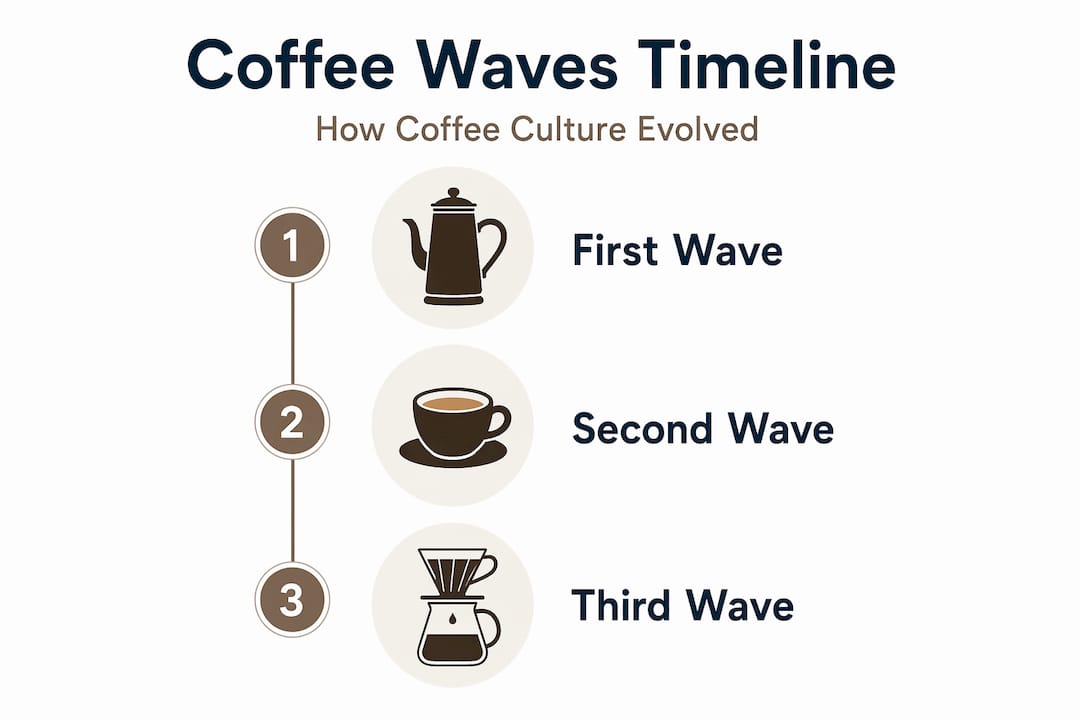
The third wave began taking shape in the early 2000s and fundamentally changed how coffee is grown, roasted, and enjoyed globally. Coffee culture shifted from treating coffee as a cultural identity placeholder to correcting the poor quality practices of earlier eras. The focus moved to the bean itself, its origin, and the craft required to honor it.
| Dimension | First wave | Second wave | Third wave |
|---|---|---|---|
| Sourcing | Commodity blends | Country-level origins | Farm and lot-level traceability |
| Roasting | Dark, mass production | Dark to medium, chain consistency | Light to medium, flavor-driven |
| Brewing | Percolator, instant | Espresso machines, automatic drip | Pour-over, AeroPress, Chemex, siphon |
| Consumer focus | Convenience | Experience and customization | Education, quality, and transparency |
Defining characteristics of third wave coffee culture
If you ask ten coffee professionals what defines third wave coffee, you will get ten slightly different answers. But several principles appear consistently across the movement.
- Single-origin and farm-level traceability. Rather than blending beans from multiple countries to achieve a standardized flavor, third wave roasters source from specific farms, cooperatives, or washing stations. A bag might read “Ethiopia, Yirgacheffe, Konga Washing Station, Washed Process,” a level of farm-level detail completely absent from earlier waves. Understanding why origin matters so deeply is worth exploring through Zscoffee’s guide on coffee origin and flavor.
- Specialty-grade beans as the baseline. The movement is built around beans scoring 80 or above on the Specialty Coffee Association’s 100-point scale. That said, “specialty” is a quality grade while “third wave” is a cultural philosophy. They overlap heavily but are not identical.
- Lighter roast profiles. Third wave roasters use lighter roasts deliberately. The goal is to let the bean’s natural flavors and terroir speak rather than replacing them with roast-derived smokiness or bitterness.
- Processing method transparency. Whether a bean is washed, naturally dried, or honey-processed changes its flavor dramatically. Third wave culture makes these processing methods part of the conversation, not a hidden detail.
- Direct trade relationships. Many third wave roasters bypass commodity markets entirely. Direct trade means building ongoing relationships with specific farmers, often paying significantly above market price and maintaining tighter quality control. It is more demanding than Fair Trade certification, and more personal.
- Consumer education as a core value. Third wave cafes and roasters treat education as part of the product. Baristas explain flavor notes. Menus list roast dates and processing methods. The assumption is that customers can learn to appreciate nuance if someone takes the time to explain it.
Pro Tip: When you pick up a bag of coffee and find only “blend” and “dark roast” on the label, that is a clear signal you are not looking at third wave sourcing. Look for a harvest date, a named farm or cooperative, and a processing method.
How third wave principles shape brewing
Understanding third wave coffee explained at the farm level is only half the story. The movement extends directly into how coffee gets prepared in the cup.
Third wave brewing treats extraction as a science. Every variable matters, and none of them are arbitrary.
- Grind size controls extraction speed. Finer grinds extract faster; coarser grinds extract slower. Light-roasted beans, which preserve acidity and aromatic compounds that darker roasts destroy, often require adjusted grind settings compared to what most people expect.
- Water temperature sits typically between 195°F and 205°F. Going too hot with a light roast can over-extract and amplify bitterness. Going too cool under-extracts and leaves the cup flat and sour.
- Brew ratio refers to the weight of coffee against the weight of water. Third wave brewing almost always uses a scale, not a scoop. A common starting ratio for pour-over is 1:15 (one gram of coffee for every 15 grams of water), though this shifts based on the bean and method.
- Brew time is tracked, not estimated. A standard pour-over might target a total brew time of three to four minutes. Deviating significantly signals something is off with the grind or pour technique.
- Method selection carries its own logic. Pour-over, AeroPress, and Chemex are popular because they give the brewer full control and produce a clean, clear cup that lets the bean’s characteristics come through without interference. You can also explore more manual methods, including the French press, through resources like this practical guide to get a feel for different approaches.
Pro Tip: If you are switching from dark-roasted coffee to a light-roasted third wave bean, grind slightly finer than you normally would and lower your water temperature by about five degrees. The flavor compounds in lighter roasts behave differently, and a small adjustment makes a significant difference.
Third wave cafes build their menus around batch-level identity. You might see the roast date, the specific lot number, and tasting notes like “bergamot, nectarine, brown sugar” listed next to the coffee’s name. That is not pretension. It is the same practice wine buyers use when they evaluate a vineyard. To fully engage with this sensory side, Zscoffee has a guide on how to taste coffee properly that makes the learning curve far less steep.
Common misconceptions about third wave coffee
Third wave coffee characteristics are real, but the label itself comes with no enforcement mechanism. That creates some meaningful problems worth understanding before you take a “third wave” claim at face value.
- The label does not guarantee quality. As experts have noted, “third wave” carries no standardized certification. A roaster or cafe can use the term without meeting any of its underlying principles. Marketing a light roast in a minimalist bag does not make it a third wave product.
- Traceability claims vary widely. Some bags list a named farm with GPS coordinates. Others list just a country and a processing method. Both might call themselves third wave. The depth of traceability signals how seriously a roaster takes the philosophy.
- Specialty grade and third wave are not the same thing. A coffee can score above 80 on the SCA scale and still be sourced, roasted, and sold with none of the transparency or craft the third wave movement is built around. Conversely, a passionate small roaster committed to direct trade and careful brewing might not use the term at all.
- Price is not a reliable proxy. Expensive coffee is not automatically third wave. Some third wave coffees are priced accessibly. Some very expensive coffees are just well-marketed commodity beans.
- The waves themselves are evolving. Some industry thinkers now talk about fourth and fifth wave concepts, focusing on sustainability, economic equity for producers, and technology-driven precision. Third wave is not the endpoint. It is a significant chapter in an ongoing shift.
How to find and appreciate authentic third wave coffee
Knowing what defines third wave coffee is one thing. Putting that knowledge to work when you are shopping or ordering is another. Here is how to approach it practically.
- Read the label like a detective. Look for the country, region, farm or cooperative name, processing method, and roast date. A roast date within the last four to eight weeks is ideal. If any of those details are missing, ask why.
- Prioritize SCA-scored or specialty-grade beans. Not every retailer publishes scores, but many third wave roasters do. Beans described as “specialty grade” with sourcing transparency are a reliable starting point.
- Try the brewing method the roaster recommends. Most third wave roasters include a suggested brewing method on the bag or their website. That recommendation is based on how the bean actually behaves and is worth following before experimenting.
- Adjust your variables before you judge the coffee. If a light-roasted Ethiopian bean tastes too sour, the issue may be under-extraction rather than the bean itself. Grind finer or increase water temperature before writing it off.
- Ask questions at the cafe or shop. A third wave barista or retailer should be able to tell you the farm, the processing method, and why they chose that bean. If they cannot or seem uninterested, the product may not live up to the label.
- Explore single-origin coffees deliberately. Buying a single-origin coffee from a known region, then comparing it to another from a different region or processing method, is the fastest way to develop the palate that makes third wave coffee genuinely exciting.
My honest take on third wave coffee
I have watched people get overwhelmed by the vocabulary of third wave coffee and conclude it is just snobbery dressed up in burlap. I get it. The first time someone explains that your coffee has “jasmine florals and a tea-like body,” it can feel alienating rather than inviting.
But here is what I have actually found after years of working with specialty coffee: the transparency that defines third wave culture is less about impressing people and more about accountability. When a roaster tells you exactly where beans came from and who grew them, they are staking their reputation on that relationship. That changes the quality of the product in ways that taste genuinely different in the cup.
What concerns me is the way the term “third wave” has become detached from its meaning in some corners of the market. Minimalist packaging and light roasts do not make a product third wave. The real marker is whether the economic model works sustainably for producers, not just for the cafe putting their name on the bag.
My advice to anyone new to this world: do not get lost in the waves framework. Let your palate lead. Buy a traceable, fresh-roasted coffee from a roaster who can tell you something real about the farm. Brew it carefully. Pay attention to what you taste. That experience, not the label, is what the movement was always about.
— zachary
Explore third wave coffee at Zscoffee
If this has you ready to actually taste what third wave principles produce, Zscoffee makes it easy to start without guesswork.
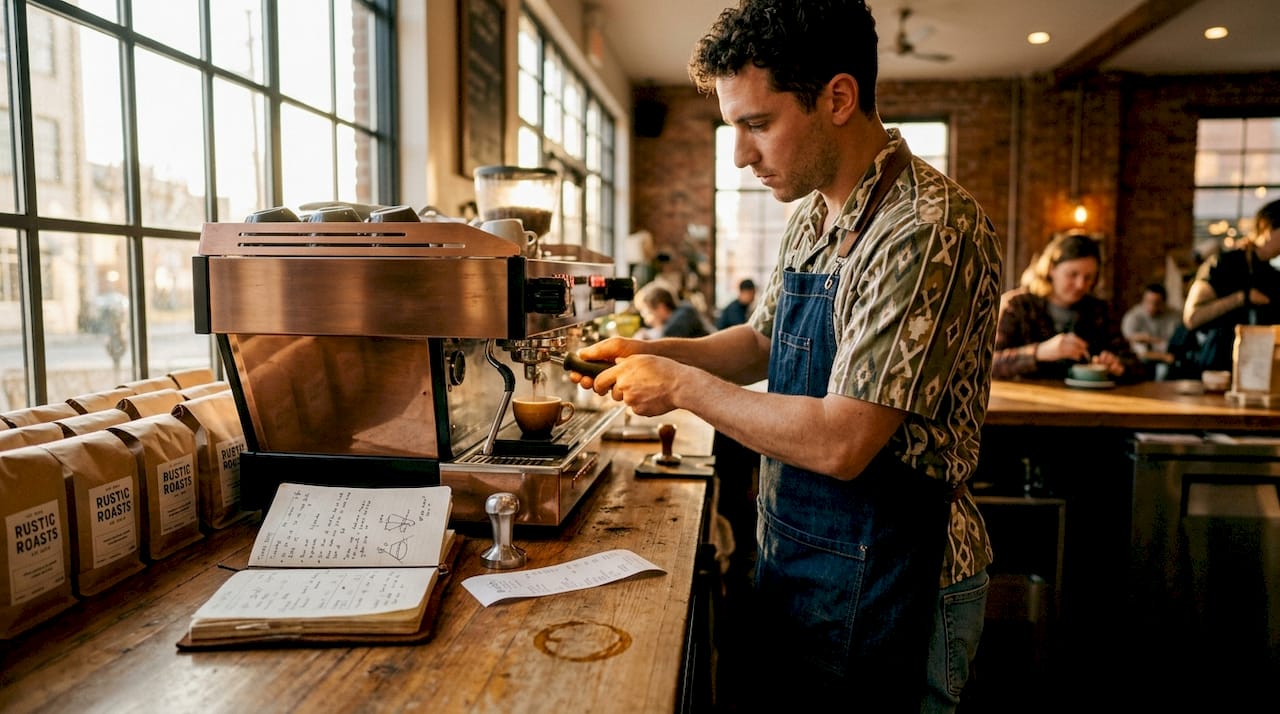
Zscoffee carries a curated selection of coffees sourced with origin transparency in mind, alongside brewing accessories designed for the kind of precision third wave methods require. Whether you want to explore a washed Ethiopian natural or pick up the tools to dial in your pour-over at home, the coffee and tea collection is a practical place to start. Each product page includes sourcing details and brewing guidance so you are not just buying coffee. You are buying context. Browse the full range at Zscoffee and find something worth paying attention to.
FAQ
What is third wave coffee in simple terms?
Third wave coffee is a movement that treats coffee as a high-quality agricultural product, emphasizing where it comes from, how it is processed, and how it is brewed. It focuses on transparency, craft, and the relationship between roasters and the farmers who grow the beans.
What is the difference between coffee waves?
The first wave made coffee a mass convenience product, the second wave built branded espresso culture and flavor customization, and the third wave shifted focus to origin traceability, specialty-grade beans, and precise brewing methods.
Does third wave coffee always mean light roast?
No. Light roasting is common in third wave coffee because it preserves natural flavors and terroir, but the defining characteristic is transparency and craft, not roast color. A medium roast with full traceability fits the movement better than an unmarked light roast.
How is third wave coffee made differently?
Third wave brewing uses precise variables including grind size, water temperature, brew ratio, and brew time, often with manual methods like pour-over, AeroPress, or Chemex. The goal is to highlight the bean’s natural characteristics rather than standardize the cup.
Are third wave coffee brands certified or regulated?
No. “Third wave” is a cultural label with no standardized certification. Quality and sourcing practices vary significantly between roasters who use the term, so reading packaging details and asking questions is more reliable than trusting the label alone.