TL;DR:
- Creating cafe-style flavored coffee at home requires precise techniques, quality ingredients, and sensory awareness. Using proper tools, selecting the right syrups and milk, and mastering shaking and frothing methods elevate the texture and flavor of your drinks. Small adjustments in process and ingredient choices enable home baristas to develop their unique style and achieve richer, more balanced results.
Making flavored coffee at home sounds straightforward until you taste the result. Something always feels off compared to your favorite café order: too sweet, too thin, or just missing that layered richness you were chasing. The good news is that café-quality flavored drinks aren’t magic. They rely on specific ingredients, precise techniques, and a few sensory habits that anyone can develop. This guide walks you through everything, from stocking your kitchen with the right tools to mastering the shaking and foaming methods that turn a basic coffee into something genuinely impressive.
Table of Contents
- Essential tools and ingredients for flavored coffee drinks
- Step-by-step recipes: Popular flavored coffee drinks you can make at home
- Techniques to master texture, foam, and mouthfeel
- Troubleshooting and common flavor mistakes
- What most home baristas miss about flavored coffee drinks
- Take your flavored coffee to the next level with Z’s Coffee
- Frequently asked questions
Key Takeaways
| Point | Details |
|---|---|
| Choose the right tools | Having the best tools and syrups makes high-quality flavored coffee easy to achieve at home. |
| Master texture techniques | Shaking espresso with syrup and ice creates creamy foam and enhances the overall experience. |
| Balance flavors smartly | Use brown sugar syrup and the right milk to avoid overpowering or flat tastes. |
| Fix common mistakes | Small tweaks to ingredients or process can quickly rescue an uninspired cup. |
| Experiment for best results | Try new combinations and adjust techniques to make every drink uniquely yours. |
Essential tools and ingredients for flavored coffee drinks
Getting consistent results starts before you ever brew a single shot. The right equipment and pantry staples make the difference between a drink that tastes homemade and one that rivals what a trained barista hands you.
Recommended tools:
- Espresso machine or Moka pot (for concentrated coffee base)
- Milk frother (handheld or electric)
- Mason jar or cocktail shaker with lid (critical for shaken drinks)
- Fine mesh strainer
- Kitchen scale for measuring syrups
- Tall glasses and wide-mouthed cups for layering
- Reusable metal straws
You don’t need professional equipment to get started. A Moka pot and a cheap handheld frother will carry you surprisingly far when your technique is solid. That said, investing in even a basic espresso machine opens up the full range of drinks you’ll want to make.
Syrups and flavor staples to keep on hand:
| Syrup or ingredient | Flavor profile | Best used in |
|---|---|---|
| Brown sugar syrup | Rich, molasses undertone | Shaken espressos, iced lattes |
| Vanilla syrup | Sweet, floral, smooth | Lattes, cappuccinos, cold brew |
| Caramel sauce | Buttery, slightly bitter | Macchiatos, hot lattes |
| Mocha syrup | Chocolatey, bold | Mochas, iced drinks |
| Cinnamon simple syrup | Warm, spiced | Fall drinks, cortados |
Milk options matter more than most people realize. Oat milk produces a creamy, full-bodied texture that complements syrup-based drinks beautifully. Almond milk is lighter and slightly nutty, which works well in vanilla or caramel drinks. Whole dairy milk creates the richest foam, but it can also overwhelm subtler flavors. Choosing your milk isn’t just about dietary preference: it directly shapes texture and mouthfeel in every sip.
Homemade versus store-bought syrups: Homemade syrups give you complete control over sweetness level, flavor intensity, and ingredient quality. A basic brown sugar syrup takes five minutes: equal parts brown sugar and water, simmered until dissolved, then cooled. The result is noticeably deeper in flavor than the bottled version. That richness comes from the molasses naturally present in brown sugar, which adds complexity that plain white sugar simply cannot replicate.
The Brown Sugar Oat Milk Shaken Espresso recipe from Fluent in Coffee demonstrates how Starbucks-style flavored drinks rely on syrup ingredients like brown sugar combined with espresso, shaking techniques, and oat milk for texture. It’s a simple formula, but the details matter enormously.
For inspiration on the coffee base itself, exploring gourmet coffee blends can help you select beans that complement your chosen flavors. A chocolatey blend pairs naturally with caramel, while a fruity Ethiopian roast plays well with vanilla.
Pro Tip: Use brown sugar syrup instead of white sugar in any shaken or iced drink. The richer base note adds a café-style depth that elevates the whole drink without requiring any additional flavoring.
Step-by-step recipes: Popular flavored coffee drinks you can make at home
With your tools ready and pantry stocked, it’s time to put everything together. These three recipes cover a range of styles, from refreshing and iced to warm and indulgent.
Recipe 1: Iced brown sugar oat milk shaken espresso
The brown sugar oat milk shaken espresso calls for brown sugar syrup rather than white sugar, combined with 2 to 3 espresso shots, shaken with ice for 15 to 20 seconds, strained over fresh ice, and topped with oat milk for a creamy finish.
- Brew 2 to 3 shots of espresso and let them cool for 2 minutes.
- Add 1 to 2 tablespoons of brown sugar syrup to a mason jar.
- Pour the espresso over the syrup.
- Add a generous handful of ice.
- Seal the jar tightly and shake vigorously for 15 to 20 seconds.
- Fill a tall glass with fresh ice.
- Strain the shaken espresso mixture over the ice.
- Pour 3 to 4 ounces of oat milk slowly over the top.
- Serve immediately with a wide straw.
Recipe 2: Vanilla caramel latte
- Brew a double shot of espresso.
- Add 1 tablespoon of vanilla syrup to the bottom of your cup.
- Froth 6 ounces of milk to 140 to 150 degrees Fahrenheit.
- Pour the espresso over the syrup and stir briefly.
- Add frothed milk, pouring slowly to create a light layer of foam.
- Drizzle caramel sauce on top in a spiral pattern.
- Serve immediately.
Recipe 3: Mocha spice coffee
- Brew a strong double shot of espresso or 6 ounces of very strong drip coffee.
- Mix 1 tablespoon of mocha syrup and a pinch of cinnamon at the bottom of your cup.
- Pour the hot espresso over the syrup mixture and stir well.
- Froth 4 ounces of whole milk until rich and creamy.
- Add the frothed milk on top.
- Finish with a dusting of cocoa powder and a pinch of cayenne if you enjoy a subtle heat.
Shaking vs. stirring: how it changes your drink
| Method | Aeration | Foam quality | Best for |
|---|---|---|---|
| Shaking | High | Creamy, micro-bubble foam | Iced syrup-based drinks |
| Stirring | Low | Minimal foam | Hot lattes, simple sweetening |
| Frothing wand | Medium to high | Dense, stable foam | Hot or cold milk-forward drinks |
| Blending | Very high | Light and fluffy | Frappuccinos, frozen drinks |
Pro Tip: Shaking espresso with syrup and ice does more than chill the drink. The rapid movement forces air into the liquid, creating micro-bubbles that mimic the texture of crema. This is why a shaken iced espresso feels so much silkier than a simply stirred one.

If you want to refine your espresso base before experimenting with flavors, the guide to brewing espresso at home covers grind size, pressure, and extraction timing in detail.
You should also pay attention to how your choice of enhancing coffee flavor at the source level, through bean selection and freshness, can change how much work your syrups actually need to do.
Techniques to master texture, foam, and mouthfeel
Recipes tell you what to do. Technique is what makes you genuinely good at it. Mouthfeel, the physical sensation of a drink as you sip it, is often the invisible factor that separates an “okay” homemade drink from one that feels truly special.
“Stirring versus shaking changes foam and mouthfeel fundamentally, especially for drinks built with espresso, syrup, and ice. Shaking creates a crema-like micro-foam that stirring simply can’t produce.” (Iced Brown Sugar Latte, Half Baked Harvest)
When to use a frother vs. hand stirring:
A frother is ideal when you want thick, stable milk foam for hot lattes, cortados, or drinks where visual presentation matters. Hand stirring works when you’re simply integrating a syrup into hot coffee and don’t need added air. For iced drinks with a syrup base, shaking beats both options.
Common mistakes that ruin texture:
- Over-diluting with too much ice before the espresso is properly chilled
- Under-aerating by shaking too gently or for too short a time
- Not chilling your glass before pouring a cold drink
- Using cold milk straight from the fridge with a frother, which leads to uneven, large bubbles instead of smooth microfoam
- Frothing milk that is too hot (above 160 degrees Fahrenheit), which destroys the foam structure
Tips for richer texture and more stable foam:
- Start with milk at around 40 degrees Fahrenheit before frothing for the densest result
- Tap and swirl the frothing pitcher on the counter after steaming to pop large bubbles
- Pre-chill your glass for 5 minutes in the freezer before making iced drinks
- Use oat milk barista editions, which are specifically formulated for better foam performance
- Strain shaken drinks through a fine mesh sieve to remove excess ice shards that dilute flavor fast
Developing your sense of what a good drink should feel like is part of becoming genuinely skilled at this. The guide to coffee tasting techniques offers a useful framework for identifying texture alongside flavor, which makes troubleshooting much easier. For a broader look at the brewing process itself, the step-by-step coffee brewing guide is worth reading alongside these technique notes.
Troubleshooting and common flavor mistakes
Even with the right tools and a solid recipe, flavor problems sneak in. The most common issues aren’t about missing a fancy ingredient. They’re about ratios, timing, and ingredient choices.
Common flavor problems and their fixes:
- Syrup overpowers the coffee: Use less syrup. Start with half the amount the recipe suggests, taste, and add gradually. Most recipes are written for people who like very sweet drinks.
- Flavors seem muted or flat: Your espresso base may be under-extracted. Grind finer, increase brew time slightly, or use more coffee grounds.
- Foam collapses immediately: Milk was too hot, or you used a low-fat milk that can’t hold structure. Switch to oat or whole milk and froth at a lower temperature.
- Drink tastes watery: Too much ice added too early, or the ice wasn’t drained before adding milk. Strain properly and use less ice in the final glass.
- Caramel or mocha tastes artificial: Store-bought syrups vary wildly in quality. Try making a simple version at home or switching to a higher-quality brand without artificial flavoring.
Why some sweeteners work better than others:
Brown sugar syrup instead of white sugar consistently produces better balance in flavored coffee drinks. White sugar dissolves into a neutral sweetness that can amplify the harsher, more bitter notes in espresso. Brown sugar’s molasses content adds a caramel-adjacent roundness that softens the coffee’s acidity and makes the whole drink taste more intentional and developed.
Honey works beautifully in warm drinks but doesn’t blend well in cold applications unless it’s first dissolved into a warm syrup. Maple syrup is excellent in fall-inspired drinks but can compete with vanilla flavors. Knowing which sweetener suits your drink style gives you a major shortcut to consistent results.
Quick fix tip: Pre-warm your cup with hot water for 30 seconds before making a hot latte. A cold cup draws heat out of the drink immediately, which also destabilizes foam faster than almost anything else.
For more ideas on balancing flavors across different roast levels and add-ins, the article on flavor pairing ideas is packed with practical combinations worth trying.
What most home baristas miss about flavored coffee drinks
Here’s the part most guides skip. Following a recipe carefully is not the same as making a great drink. Two people can follow identical steps with identical ingredients and produce noticeably different results. The gap usually lives in small sensory decisions that happen in real time.
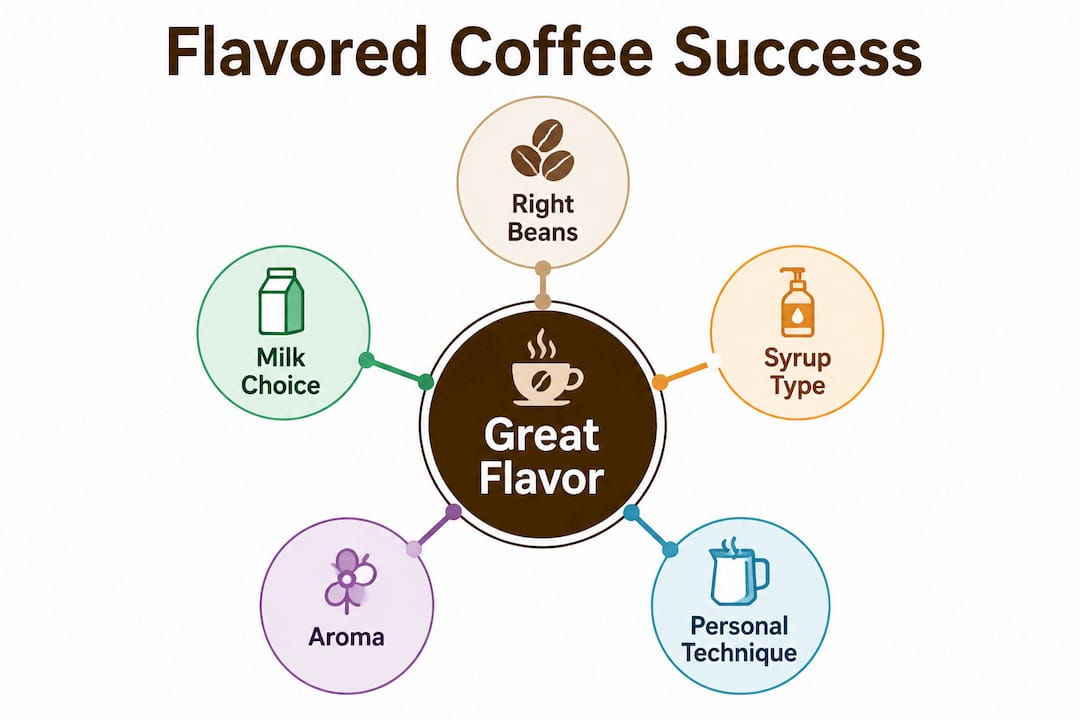
Most beginners pour all of their attention into syrups. Which one, how much, what brand. And while syrups matter, they’re actually one of the more forgiving variables. The real breakthroughs come from process: how long you shake, what temperature your milk starts at, whether your espresso is fresh or sat for three minutes, whether you pour slowly or fast. These micro-decisions shape aroma, texture, temperature, and mouthfeel in ways that no amount of premium syrup can compensate for.
Aroma especially gets overlooked. Smell accounts for a huge portion of how we perceive flavor. A drink that smells amazing before you even sip it already has an advantage. This means using freshly ground beans, making syrups with real cinnamon or whole vanilla, and serving drinks immediately rather than letting them sit.
The most interesting home baristas we’ve seen aren’t the ones who replicate café drinks perfectly. They’re the ones who get comfortable experimenting. Try shaking for 25 seconds instead of 15 and notice the difference. Swap half the oat milk for coconut cream. Use a darker roast and reduce the syrup by a third. These small, playful changes build an intuition that no recipe can teach you.
Ditch the idea that there’s a single correct version of any flavored drink. There isn’t. Building your personal home barista workflow around curiosity rather than rigid replication is what turns a hobby into genuine skill.
Take your flavored coffee to the next level with Z’s Coffee
Ready to put your new skills into practice with the best possible ingredients?

At Z’s Coffee, we’ve curated a lineup of products that make recreating café-quality drinks at home simple and enjoyable. Whether you’re experimenting with a quick weekday drink or perfecting your weekend shaken espresso ritual, the right coffee base makes all the difference. Our instant coffee options are a brilliant shortcut for syrup-based drinks when you want strong, concentrated flavor without a machine. For iced and shaken recipes, our cold brew coffee delivers a smooth, low-acid base that pairs exceptionally well with brown sugar and vanilla syrups. Explore the full range and find exactly what your next flavored creation needs.
Frequently asked questions
What’s the best way to sweeten flavored coffee drinks at home?
Syrup-style sweeteners like brown sugar syrup blend better than granulated sugars and create a smoother, more balanced flavor that doesn’t spike harshly against the coffee’s bitterness.
What technique creates creamy foam for iced flavored drinks?
Vigorously shaking espresso with syrup and ice creates a creamy, stable foam because shaking vs. stirring fundamentally changes the aeration and mouthfeel of the final drink.
Which milk types work best for flavored coffee drinks?
Oat milk, almond milk, and traditional dairy all work well, but oat milk is widely preferred in modern flavored recipes because it adds texture and light sweetness without competing with the syrup flavors.
Why do my flavored coffee drinks taste too sweet or harsh?
Using too much syrup or relying on white sugar often overloads the drink. Reducing sweetener quantity and switching to brown sugar syrup instead introduces natural molasses complexity that balances rather than overwhelms the espresso.